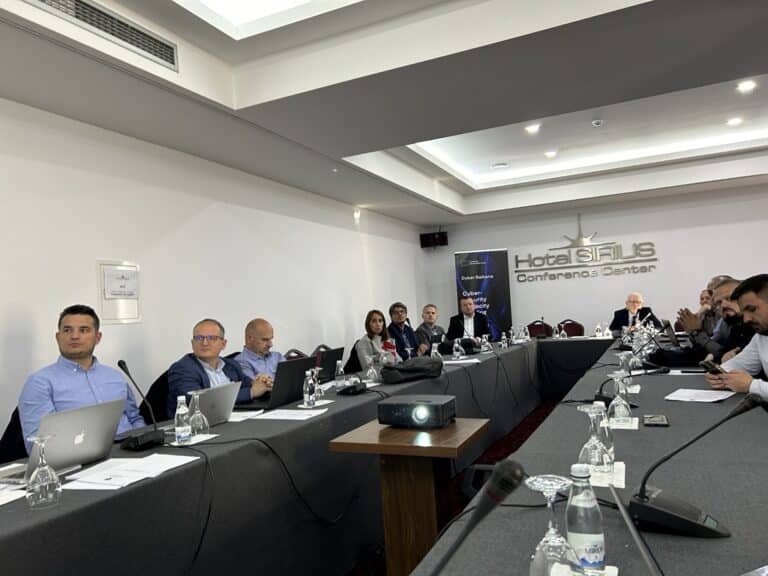
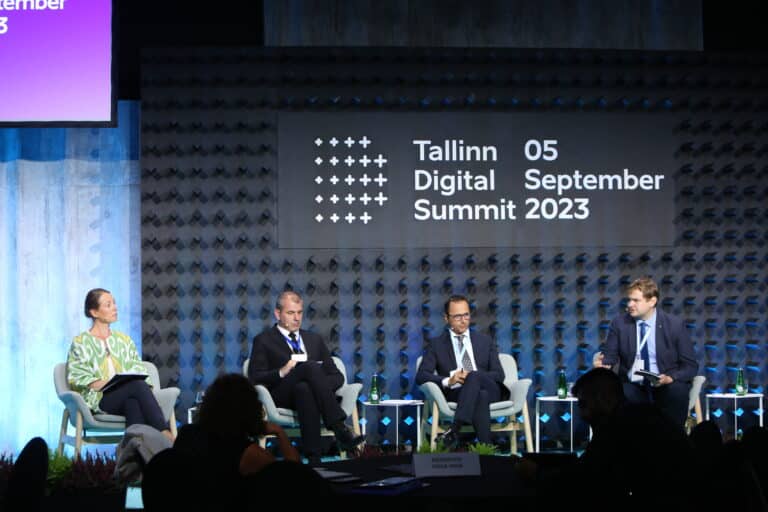
The high level meeting on November 6-8, 2011 in Tirana, Albania brought together Ministers from SEE region responsible for information society development in their country to share the latest and priorities for the future. On November 7th, a regional information society action plan eSEE Agenda+ and High Level Statement was adopted.
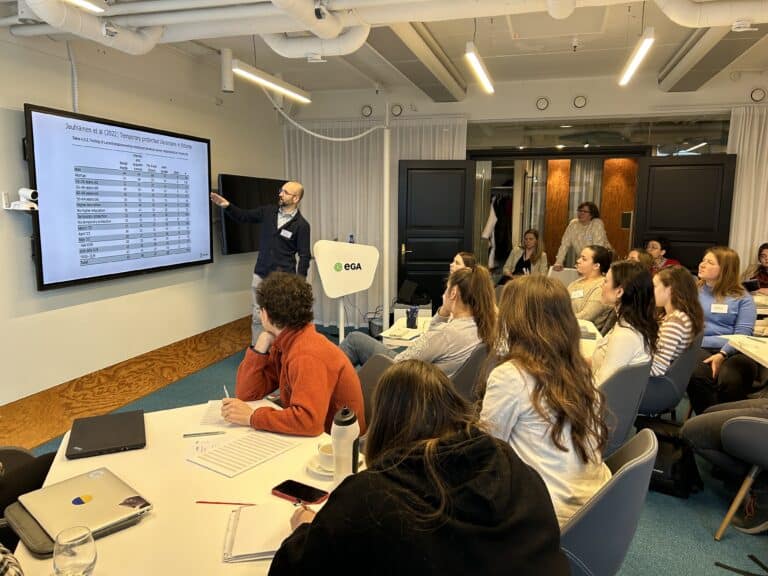
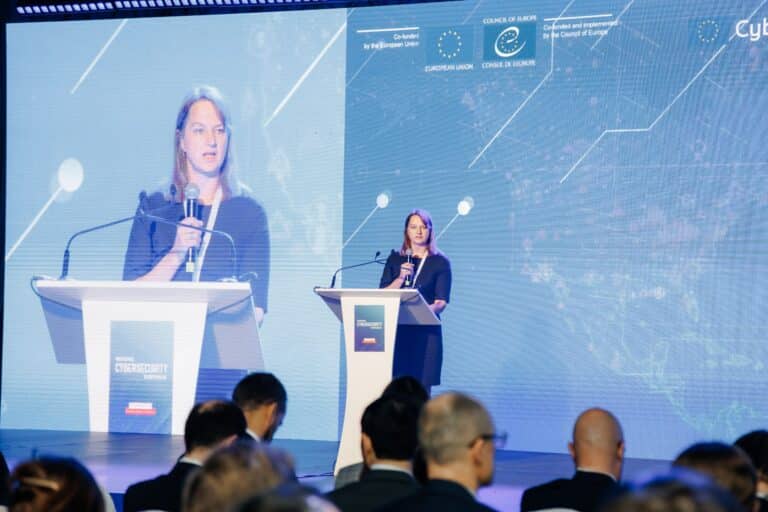
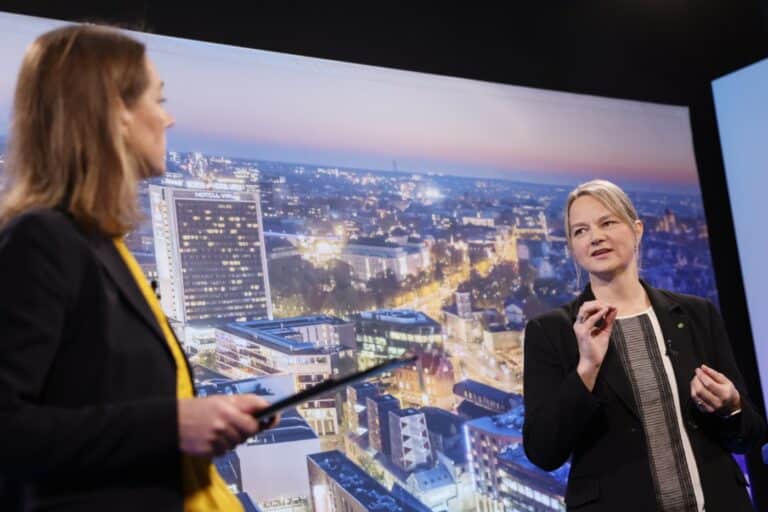
Nele introduced Estonian experience in using ICTs for government innovation and showed the case of successful development of information society for open and participatory governance.
The meeting was co-organised by Albanian Ministry of Innovation and Information and Communication Technologies, Regional Cooperation Council and United Nations Development Programme.
For further information, please, turn to nele@ega.ee
After a selection process that lasted several weeks throughout the summer and the auditions which took place in the City Hall of Issy-les-Moulineaux on Wednesday, October 12th, the results were revealed during an official ceremony at the French Ministry of Foreign Affairs in Paris, on Thursday, October 14.
The European Award went to the Icelandic foundation citizens.is whose purpose is to promote democracy worldwide. Citizens.is develops platforms that encourage the dialogue between citizens, like for example the website of the "Shadow Parliament" or the "Better Reykjavik".
The winner of the International Award is Personal Democracy Forum, better known as PdF that is an annual conference and community website founded by Andrew Rasiej and Micah Sifry about the intersection of politics and technology. Personal Democracy Forum has become a reference for all those who are interested in the way the Internet changes politics and governance. An associated website, TechPresident.com, covers how the US presidential candidates are using the web, and how content generated by voters is affecting the campaign.
The World eGov Forum and awards ceremony was attended also by Ms Nele Leosk, her participation was supported by State Information System’s Authority (from EU Regional Funds).
Yesterday the Prime Minister of the Republic of Molodva, Mr. Vladimir Filat, accompanied by Moldovian government officials, visited e-Governance Academy. Mr. Arvo Ott and Mr. Hannes Astok welcomed the honoured guest. The discussion topics included possible cooperation perspectives.
The founder of eGovernance Academy Mr. Ivar Tallo delivered a lecture „Can moscito teach an elephant?“ on the development of Estonian IT to the Minister of Communications and IT of India H.E.Kapil Sibal. Minister Sibal expressed Indian interest to learn from successful examples of e-Estonia as electronic services delivery would radically reduce corruption and enable government to cope with ever growing demands for public services.

Prime Minister of Estonia Andrus Ansip dropped by the lecture to greet Minister Kapil Sibal
The project - eCitizen II – Towards citizen-centered eGovernment in European cities and regions is launched at the beginning of January 2010 and leaded by The Baltic Institute of Finland. The role of eGa in the project is to offer overall e-democracy-related expertise, to advise on organization of joint seminars in partner countries and to contribute to writing e-particiaption manual as concrete outcome of the project.
The cooperation is designed to support European cities and regions in their joint efforts to accelerate eGovernment through exploiting established networks, gained experiences and good practices to improve interaction between citizens and public authorities, better involving citizens in local decision-making and contributing to change in operational culture and attitudes within public administrations.
For further information visit http://www.baltic.org/projects/ecitizen_ii or write to Kristina Reinsalu, kristina@ega.ee
The Consulate aims to promote Estonian-Indonesian cooperation in the political, economic, technical, scientific, and education fields.
The e-Governance Academy, in cooperation with the Government of India organised 1-week study tour on Estonian e-government development and e-governance achievements for 24 high officials from India.
Although India has not much to learn from other countries, it is still important to share experiences and study different methods of developing the e-environment. After intensive study week of "e-life" in Estonia, all participants of the group were impressed not only by the fact that most of the services are "delivered home" for the citizens and no need to fill documents on paper in different offices, but also that all services function well and people are eager to use these.

More info from Annela Kiirats, eGA Training Manager: annela.kiirats@ega.ee
Altghough elections for Estonian Parliament 2011 are sinking into the past, we think it is the right time to evaluate the campaign and it´s possible influence.
What exactly characterizes this campaign in online-environments and how much attention was paid to social media? – this is analyzed in publication of e-Governance Academy presented 2 June 2011 in National Library.
Beside experts of eGA also Master students of Communication Management at Univeristy of Tartu participated as researchers. The campaign was analyzed between February 14 – 1st of March 2011. We are especially proud of that the analyzis was ready only less that 2 month arter the elections and the methodolodgy it uses, is far borader than most of the studies of same topic.
As to conclude, the fact is that campiagn has moved more to Internet than this has ever been, and more than ever it has moved to social media. Differently from last elections, when Twitter very populaar, this time Facebook was the most used social media environment.
If interested, the full text of publication is available in here (in English).
The study is financed by European Foundation of Regional Devleopment under the EU SF programme "Raising Public Awareness about the Information Society"
eGA Director, Mr. Arvo Ott and Programme Director, Mrs. Liia Hänni gave an overview of eGA activities and discussed possible future cooperation plans with the Ambassador of Rwanda in Netherlands, Mrs. Immaculée Uwanyiligira and Second Counselor, Mr. Eric Rugamba.

EPFL MIR e-Gov regularly offers a one-year Executive master Program in e-Goverrnance, where the degree is being issued by the Swiss Federal Institute of Technology, Lausanne. eGA is a partner of this program. eGA role was providing appropriate space and learning environment for up to 15 participants; taking care of the program participants within the module, providing technical infrastructure, reception and introduction of the lecturers, organizing scientific program of the week, making lectures and taking exams from students at the end of each module.
This year there were students from Zambia, Haiti, Poland, Nepal and St. Kitts and Nevis as participants. The participants of this e-Gov Master programme usually spend during their years´ time studies of 6-7 modules in different countries. The Estonian module is evaluated among the participants as one of the most interesting and practical . During this one-week training participants were given overview of the whole e-governance theme starting from general topics as politics of information society and Basic infrastructure reaching to very specific topis as e-Notary, or Mobile-based services. Usually the participants are most ipmressed of Estonian X-Road and ID-card as a bases for all already existing and planned e-services.
For more information on the project please turn to Kristina Reinsalu kristina@ega.ee
The project was funded by College of Management of Technology of the Ecole Polütehnique Federale de Lausanne.

The Zambian Government aims to improve its governmental services to its citizens and also improve efficiency of internal Government operations by changing current manual processes into automated one.
Participants of the group were mainly Directors and Assistant Directors, whose aim is to master and transfer knowledge and take actions that in the end will improve governmental public services in Zambia. The group of 20 people was headed by the Permanent Secretary of the Ministry of Communications and Transport, Mr.Dominic Y. Sichinga, SC.
The study visit was financed by the Estonian Ministry of Foreign Affairs.

The Foreign Minister of Zambia, Mr. Kabinga J. Pande visited Estonia during his formal visit of Nordic countries in October, 2007. Among other visits, like official meeting with the Prime Minister, Mr. Ansip and the Foreign Minister, Mr. Paet, he also visited eGA.
The e-Governance Academy is implementing the project “e-Transformation and e-Government capacity building support for the Moldovan Government”, funded by the Estonian Ministry of Foreign Affairs.
The main focus of the cooperation program is to transfer Estonian e-government implementation experience to the Moldovan Government
One activity, among others, is to bring a group of Moldovan Government politicians and other higher officials to Tallinn for a study tour. 14 officials are in Tallinn this week, participating in visits to different institutions. The topic of the study tour is “Governmental interoperability implementation”.
The study tour is financed by the Estonian Ministry of Foreign Affairs, partly also by the UNDP and the World Bank.
The International Conference on Theory and Practice of Electronic Governance (ICEGOV) series focuses on the use of technology to transform relationships between government and citizens, businesses, civil society and other arms of government (Electronic Governance).
The Series looks beyond the traditional focus on technology-enabled transformation in government (Electronic Government), towards establishing foundations for good governance and for sustainable national development.
The ICEGOV2011 Program Committee invites submissions of unpublished, original work - completed or ongoing - in the form of papers, case studies, demonstrations and posters:
1) Papers - Describing mature work in one or more of the research, practice or solutions aspects of Electronic Governance, with proven or potential capacity to advance the state-of-the-art in the field.
2) Case Studies - Analyzing Electronic Governance initiatives, whether research, practice or solutions, to identify critical factors contributing to their success or failure.
3) Demonstrations - Demonstrating how solutions, possibly obtained through research, are being applied in the practice of Electronic Governance, consequently giving rise to new research.
4) Posters - Presenting new ideas and ongoing work related to research, practice or solutions for Electronic Governance, with proven or potential capacity for bridging two or more dimensions.
The contributions can originate from: (1) Government - Experiences, case studies and lessons learnt while planning, developing, executing and evaluating Electronic Governance initiatives; (2) Academia - Foundations of Electronic Governance, including development, validation and implementation of relevant theories, models and specifications; or (3) Industry and NGOs - Technologies, methods and tools upon which concrete solutions for Electronic Governance - systems, processes, services and organizations - can be built.
ICEGOV2011 particularly welcomes: (a) Cross-sector contributions that aim to establish connections between research, solutions and practice of Electronic Governance, and succeed in effectively communicating their findings from researchers to solution providers, from solution providers to public managers, and from public managers back to researchers; (b) Papers that cross the borders of the relevant disciplines - Information Technology, Computing, Public Administration and Policy, Political Science, Information Science, Linguistics, Law, Economics, Sociology, Business Administration, etc. and (c) Papers on one or more of the practice, solutions or research aspects of Electronic Governance.
IMPORTANT DATES
For more information check www.icegov.org
Deputy Minister of Education of Palestine - Mr. Basri Salmoodi together with the representatives from universities and schools visited Estonia to get acquainted with Estonian experience in using ICT in education.
According to Mr. Basri Salmoodi, Palestine is eager to cooperate with Estonia in this field. "Estonia is a leading country in e-governance and e-learning and we want to learn from your reform experience and lessons," added Mr Salmoodi.
Program director of e-Governance Academy Nele Leosk outlined the growing interest of Palestine in modernizing education management and learning processes by implementing various e-solutions.
During the last week, the delegation was given an overview of how the internet and technologies are used in Estonian education system and everyday school life: education management and coordination, information systems, online learning environments, virtual learning materials, etc. The delegation visited Tallinn University, Tartu University, Ministry of Education and Science as well as various schools.
The cooperation is supported by the Estonian Ministry of Foreign Affairs and UNESCO.
For further information:
Nele Leosk
Programm director
55617153
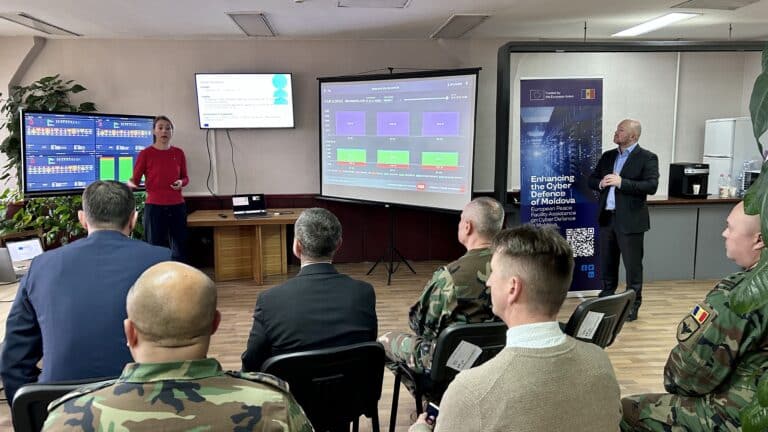
The introductory seminar presenting Estonian experience in e-governance took place on the 2nd of March in Chisinau. The seminar gave an overview of e-governance in Estonia to the IT-managers of ministries and state institutions in Moldova. The prime minister of Moldova Vladimir Filat was an honored guest of the seminar.
One of the main aims of Moldovan government are state reform and implementation of e-government in particular. Estonian experts Arvo Ott and Hannes Astok gave an overview of Estonian e-government experience and demonstrated the use of ID card and mobile ID.
As the result of the project an action plan will be made that will help to create a data exchange layer for state institutions which in turn will foster the implementation of e-services in Moldova.
The project of e-Governance Academy „eTransformation and eGovernment capacity building support for the Moldovan Government“ is supported by Estonian Ministry of Foreign Affairs.
Additional information:
Hannes Astok
5091366